Landscape Design in Portland, OR
Crowded beds and awkward layouts get a clear plan that fits your space and style.
Schedule a Consultation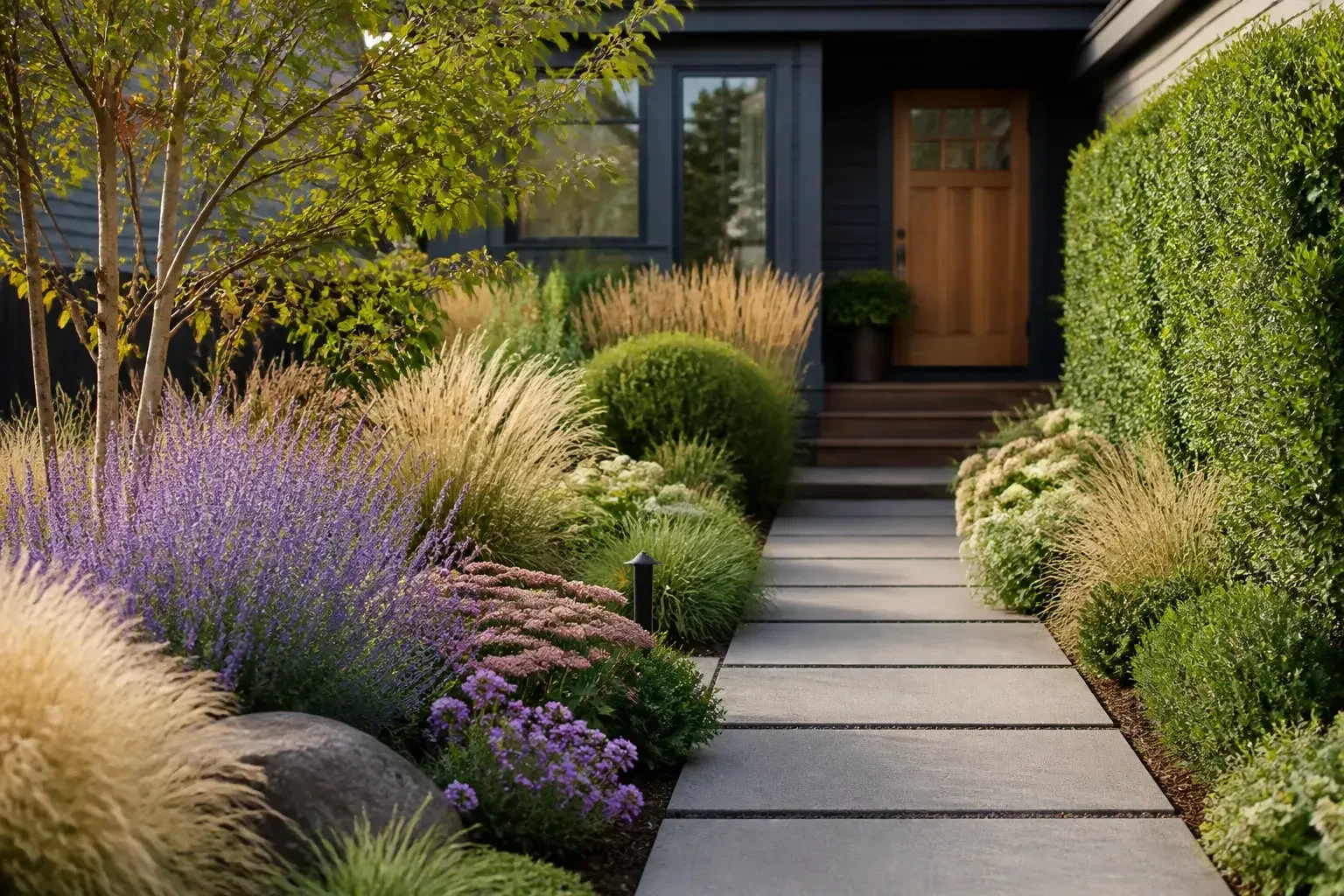
When a yard feels unfinished, it usually shows up in small ways first. The patio may feel too exposed, planting areas may look disconnected, and the whole space can be hard to use in a way that feels intentional.
If you are ready for a plan that makes the property feel more pulled together, Cedar & Stone Landscapes can help you shape the layout before any work begins. We start with how you want the space to function, then build around the site conditions, the style of your home, and the outdoor features you want to live with every day.
What a design should solve
Landscape design is not just about picking plants. It is about making the yard easier to use, easier to maintain, and more enjoyable from the house and outside it.
A strong design should answer practical questions such as where people walk, where they sit, where shade or light is needed, and how the main outdoor features connect. Without that plan, the space can end up with isolated pieces that never quite feel finished.
A useful design often addresses:
- Traffic flow: Paths and gathering areas should move naturally from one part of the yard to another.
- Usable space: Open areas should have a purpose, whether that is dining, relaxing, planting, or circulation.
- Visual balance: Plants, patios, and hardscape should feel connected rather than scattered.
- Year-round structure: The yard should still look intentional when seasonal color changes.
How we approach design
The first step is listening. Before sketching ideas, we learn how you use the yard now, what feels awkward, and what you want to change. Some homeowners want a cleaner layout for entertaining. Others want a quieter garden feel or a better way to connect a patio with planting beds.
From there, we look at the property as a whole. That includes the shape of the space, the way different outdoor features interact, and where hardscape, garden lighting, or seasonal care may support the finished plan. Cedar & Stone Landscapes builds the design around real use, not just appearance.
Site goals
We clarify what success looks like for you so the design has a direction from the start. That may mean more structure, better privacy, easier upkeep, or a more welcoming front and back yard experience.
Layout planning
We map out where the major elements belong so the yard feels organized. This is where patios, planting areas, borders, and lighting all start to work together instead of competing for attention.
Material direction
We help narrow down the look and feel of the space so the final design feels cohesive. Texture, shape, and color all matter when the goal is a finished landscape that suits the home.
Design features to consider
A good landscape design should reflect how you actually live outside. That means looking beyond a single focal point and considering the pieces that shape everyday use.
- Patios: A patio can anchor the design and create a defined place for seating, dining, or gathering.
- Hardscape transitions: Steps, borders, and connecting surfaces help separate spaces without making the yard feel chopped up.
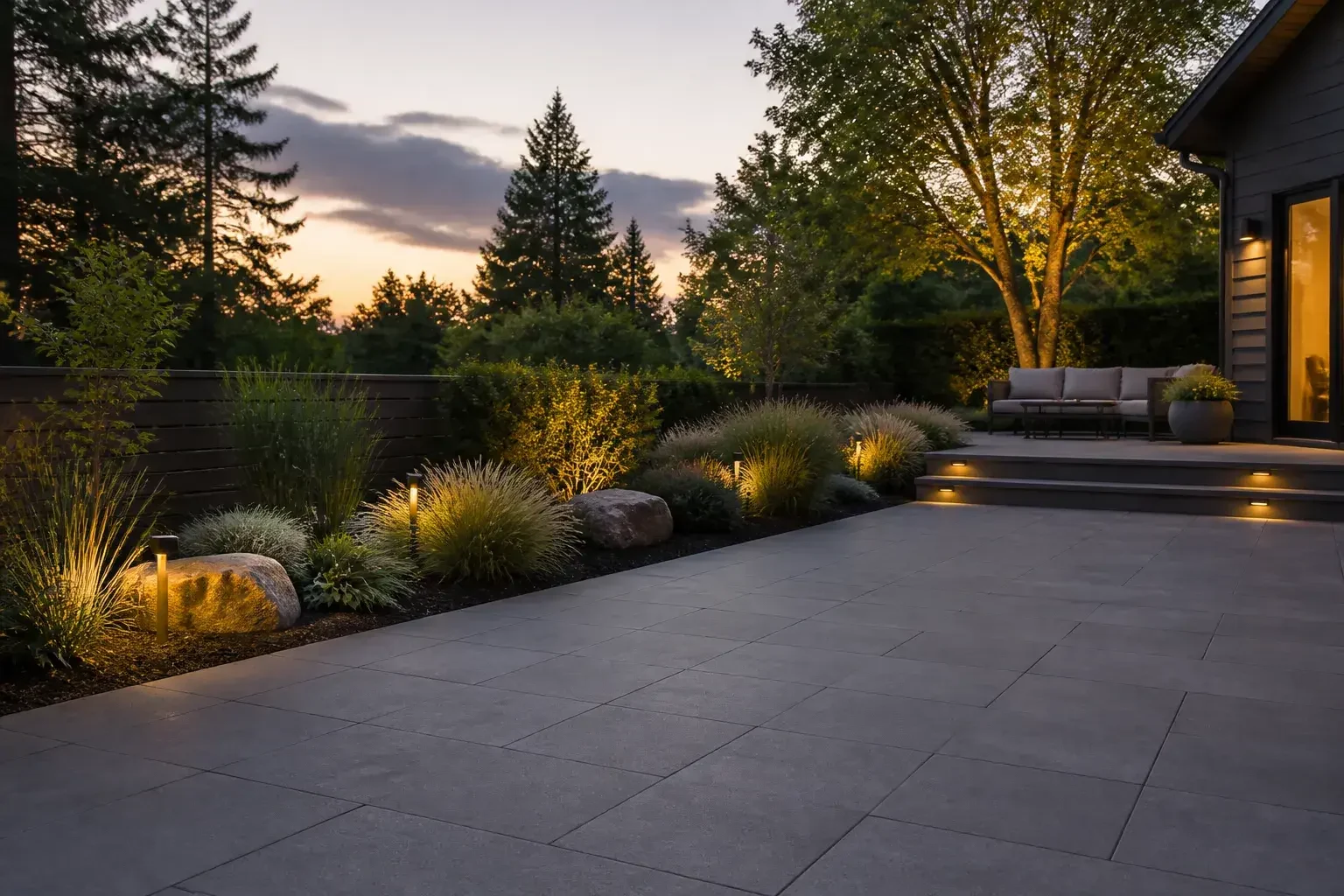
- Garden lighting: Light can improve visibility and extend the use of the yard into the evening while highlighting key features.
- Planting structure: Plants should add movement, texture, and seasonal interest without overwhelming the layout.
- Seasonal care: A design that accounts for upkeep is easier to keep looking finished through the year.
These elements should not be chosen in isolation. When they are planned together, the result feels more natural and more practical.
Common design problems
A yard can look fine in pieces and still feel off overall. If the space has never been planned as one whole environment, the problems usually show up in predictable ways.
- Disconnected areas: The patio, garden beds, and open lawn may feel like separate projects instead of one complete design.
- Too many focal points: When every part of the yard tries to stand out, nothing feels settled.
- No clear function: A space without a clear use often becomes underused because people do not know where to gather or move.
- Weak nighttime feel: Without garden lighting, a landscape can lose depth and usefulness after dark.
- Planting that does not frame the space: Beds that are too sparse or too crowded can make the yard feel unfinished.
Once the design is organized around real use, these problems become much easier to correct.
Working with your property
Every site has its own limits and opportunities, and the design should respect both. A compact yard may need a tighter layout with stronger edges. A larger property may need more definition so the space does not feel empty or scattered.
The goal is to make the outdoor area feel like it belongs to the house. That means paying attention to scale, proportion, and sightlines from windows, doors, and main gathering spaces. In Portland, that often means creating a design that feels comfortable through changing seasons while still looking purposeful day to day.
We also consider how the finished landscape should function over time. If a design is too complicated, it can become frustrating to live with. If it is too bare, it can lack character. The right balance creates a space that feels welcoming without asking too much from the homeowner.
What to expect
When you start a landscape design project with Cedar & Stone Landscapes, the process should feel organized rather than overwhelming. We keep the conversation focused on what matters most to the property and to your goals.
1. Initial conversation
We start by learning what is not working and what you would like the space to become. This helps shape the design direction before any choices are narrowed down.
2. Site review
We look at the existing layout, note the major features, and identify where changes can make the biggest difference. This is where practical decisions begin to take shape.
3. Design direction
We develop a plan that connects the key pieces of the yard. That may include patio placement, hardscape transitions, lighting ideas, and planting structure.
4. Refinement
We adjust the plan so it feels right for the property and the way you want to use it. Good design should feel specific, not generic.
Built for daily use
A landscape should look good, but it also needs to work well on an ordinary day. That is why the best designs are the ones that make everyday use easier.
A thoughtful plan can:
- Create clearer movement: You can move through the yard without awkward turns or dead ends.
- Define gathering areas: Seating and dining spaces feel more natural when they have a clear edge and purpose.
- Support easier upkeep: When planting and structure are organized well, the yard is simpler to care for.
- Improve evening use: Garden lighting makes the space more usable and more inviting after sunset.
- Tie features together: Patios, beds, and hardscape should look like part of the same plan.
This is where landscape design becomes practical, not just visual. The yard should fit the way you live, not force you to work around it.
Local design needs
Designing for Portland means thinking about how the outdoor space will feel over time, not just on day one. The layout should suit the home, the yard, and the way you want to enjoy it through changing conditions.
Cedar & Stone Landscapes works with homeowners in Portland, Beaverton, Lake Oswego, and Tigard who want a more cohesive outdoor plan. Some are starting fresh, while others are trying to improve a yard that never quite came together. In either case, the goal is the same: make the property feel more intentional and more usable.
If you already know you want patios, hardscape, lighting, or seasonal care as part of the result, those pieces can be folded into the design from the beginning. That leads to a stronger outcome than treating each feature as an afterthought.
Common questions
How do I know if my yard needs a redesign?
If the space feels awkward to use, lacks clear structure, or has features that do not connect well, a redesign can help bring it together.
Can a landscape design include patios and hardscape?
Yes. Those elements often work best when they are considered during the design stage instead of added later.
What if I want the yard to look good in the evening too?
Garden lighting can be part of the design so the space feels comfortable and visually balanced after dark.
Do I need to know exactly what I want before starting?
No. It helps to have a few goals, but the design process can help narrow down options and turn general ideas into a clear plan.
Can the design be built around easier upkeep?
Yes. A thoughtful layout can reduce clutter, create cleaner edges, and make the space simpler to care for.
What areas do you serve for landscape design?
We work with homeowners in Portland, Beaverton, Lake Oswego, and Tigard.
Start the plan
If your yard feels incomplete, unclear, or hard to enjoy, landscape design is the place to start. Cedar & Stone Landscapes can help you shape a plan that fits the property and the way you want to use it.
The right design gives every part of the yard a job to do. That is what turns an ordinary outdoor space into something that feels connected, useful, and ready to live in.
How We Work
A Clear Path From Idea to Finish
Every project starts with a conversation about your property, your goals, and the best way to bring the space together.
- 01
Review the Property
We look at the space, listen to what you want, and identify the best direction for the project.
- 02
Plan the Work
You get a clear approach for design, hardscape, lighting, or care based on your priorities.
- 03
Complete the Project
We carry out the work carefully and leave the space ready to enjoy.
FAQ
Common Landscaping Questions
How do I know which landscaping service I need?
Start with what your property needs most, whether that is a new design, a patio, lighting, or seasonal care. We can help sort out the best fit.
Can you help with both design and installation?
Yes, we can help plan the space and carry out the work that brings the design to life.
Do patios and hardscape work with existing landscaping?
They often do, especially when the new feature is planned around the yard’s layout and use. A good design helps everything feel connected.
Is garden lighting only for decoration?
No, lighting can improve visibility, highlight features, and make outdoor spaces easier to use after dark.
What does seasonal care include?
It depends on the time of year and the needs of the property. Seasonal care helps keep the landscape healthy, tidy, and ready for changing weather.
Get started
Start Your Portland Landscape Project
Tell us what you want to change outdoors, and we will help you plan the right next step for design, hardscape, lighting, or seasonal care.