Garden Lighting in Portland, OR
Dark garden spaces gain visibility, curb appeal, and a better evening atmosphere.
Schedule a Consultation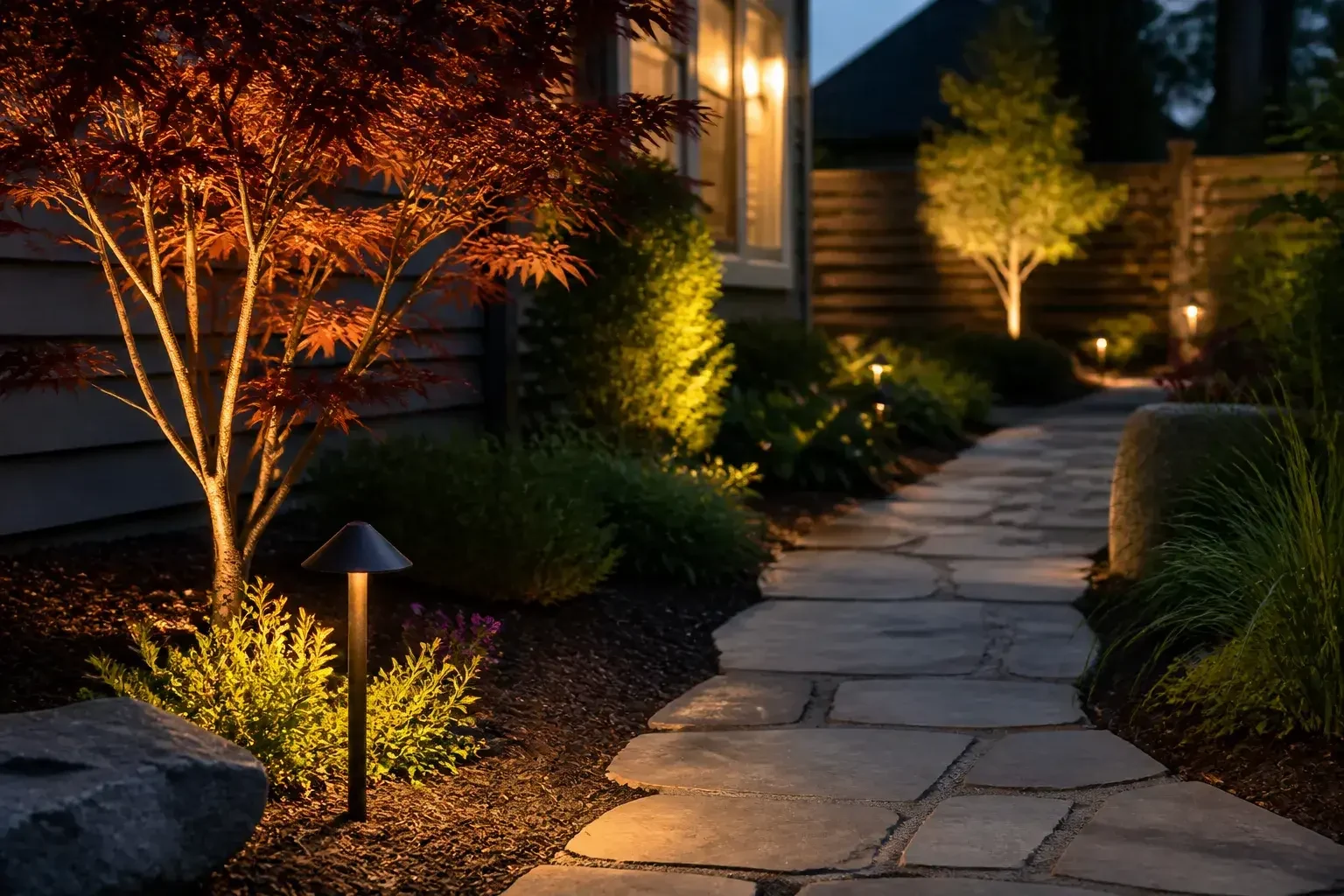
When your yard looks unfinished after sunset, it can make the whole property feel less inviting. Paths fade into shadow, planting beds disappear, and the spaces you enjoy during the day stop feeling useful once it gets dark.
If you are tired of squinting across steps, guessing where a walkway ends, or watching your landscape disappear at night, the next step is simple. Cedar & Stone Landscapes designs garden lighting that helps your outdoor spaces stay visible, comfortable, and attractive after dark.
Garden lighting goals
Garden lighting should do more than brighten a few spots. It should guide movement, highlight the parts of your yard you want noticed, and make outdoor space easier to use in the evening. A good layout feels natural, not overlit or harsh.
For many homeowners, the right system starts with a few clear priorities:
- Safer movement: Light at steps, paths, and transition points helps people move with more confidence after dark.
- Stronger curb appeal: Soft illumination can make planting beds, trees, and architectural features stand out without overwhelming the scene.
- Better evening use: A well-lit garden stays usable for relaxing, visiting, or simply checking on the yard at night.
- Cleaner visual balance: Carefully placed fixtures keep light where it belongs instead of scattering brightness across the whole property.
Cedar & Stone Landscapes builds garden lighting around the actual layout of your outdoor space, not a one-size-fits-all pattern.
Common warning signs
Some yards clearly need garden lighting. Others only seem fine until you start using them after dusk and notice how much gets lost in the dark.
What homeowners notice
- Dark walkways: Path edges and changes in grade can be hard to see when the sun goes down.
- Lost focal points: Beds, shrubs, specimen plantings, and hardscape features can disappear at night.
- Uneven brightness: A few overly bright spots leave other areas difficult to navigate.
- Underused outdoor space: The yard feels less welcoming once daylight fades, so people avoid using it.
- Weak visual flow: Without lighting, the transition from house to patio to garden can feel abrupt and unfinished.
If these problems sound familiar, garden lighting can make the space feel more intentional without changing the character of the landscape.
Design that fits the yard
Good lighting starts with observation. We look at how people move through the space, where the eye naturally goes, and which parts of the landscape deserve emphasis. The goal is not to light everything. The goal is to shape the experience of the yard at night.
Areas we often light
- Walkways and steps: These are the first places where practical light matters, because clear footing makes outdoor movement easier.
- Garden beds: Soft light can reveal texture, form, and plant layers without flattening the scene.
- Entry points: Gates, transitions, and side paths become easier to find and use.
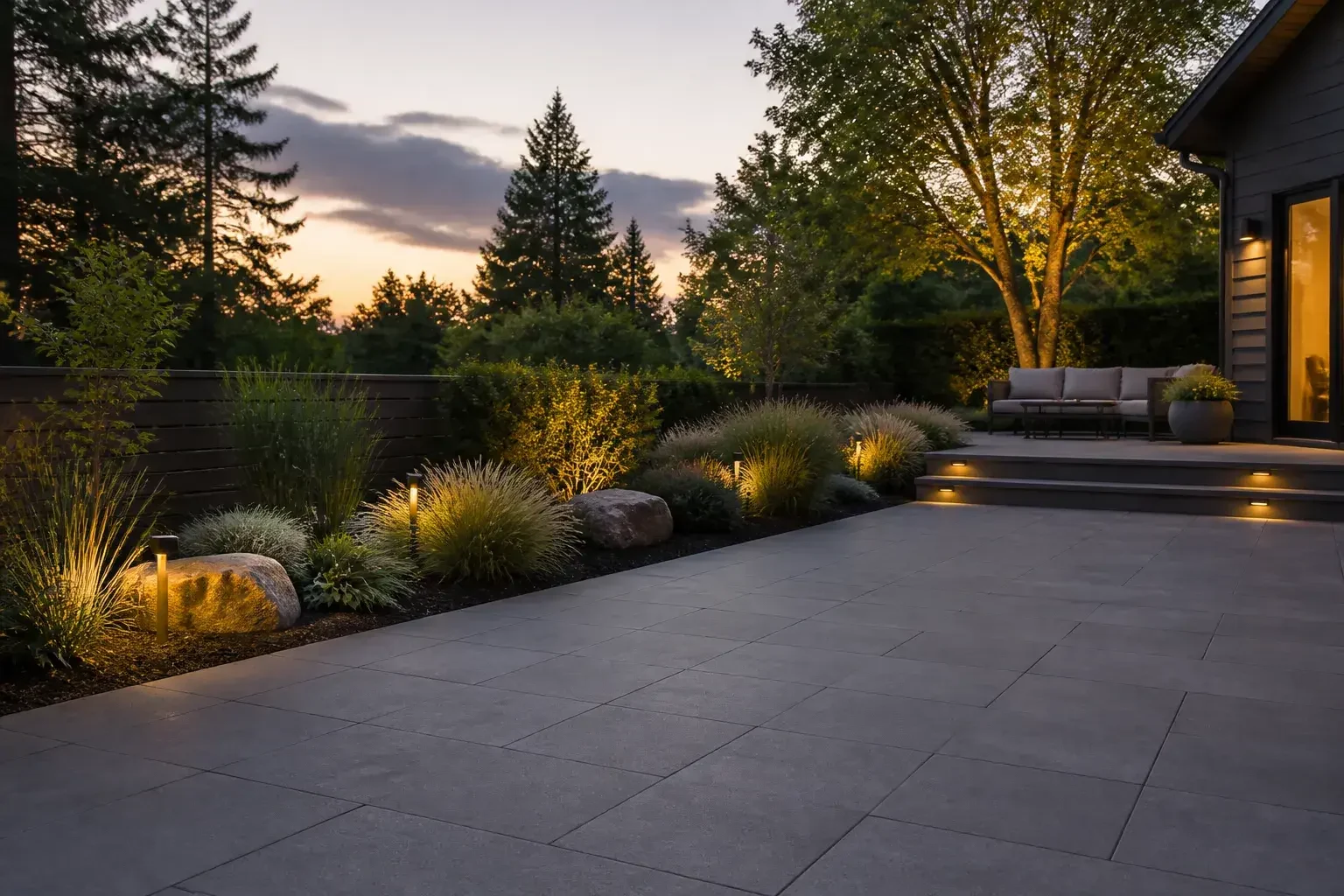
- Patios and gathering spaces: Light around seating areas helps define the space and extend its usefulness into the evening.
- Trees and focal plants: Selective uplighting or accent placement can make an important planting feature stand out.
Garden lighting also needs restraint. Too many fixtures can create visual noise, while too few can leave the yard patchy and disconnected. We help homeowners find the middle ground so the design feels calm and complete.
How we approach it
A strong lighting layout depends on where light should land, how it should spread, and what it should avoid. Cedar & Stone Landscapes keeps the process grounded in the shape of your property and the way you actually use it.
- Walk the space: We look at paths, beds, patios, steps, and viewing angles to understand how the yard functions after dark.
- Identify priorities: We decide which areas need visibility, which should be highlighted, and which should stay quiet.
- Plan fixture placement: We map out positions that support the design instead of placing lights randomly.
- Balance brightness: We aim for enough light to guide movement and reveal features without creating glare.
- Refine the effect: The finished result should feel intentional, with light that supports the landscape instead of competing with it.
This kind of planning is especially useful when the yard already includes planting beds, walkways, and hardscape elements that deserve different treatment at night.
Pairing with hardscape
Garden lighting works especially well when it is considered alongside patios and hardscape. Stone edges, retaining elements, steps, and walkways can all benefit from a lighting plan that matches the structure of the space.
When light and hardscape work together, the yard feels easier to read after dark. Steps stand out more clearly, patio boundaries feel defined, and paths become more comfortable to follow. The result is not just visibility. It is a better sense of order.
That is one reason Cedar & Stone Landscapes often treats lighting as part of the broader landscape picture rather than a separate add-on. If your yard already includes a patio, stone paths, or layered garden beds, lighting can help connect those elements into one cohesive evening setting.
Seasonal upkeep
Lighting needs can shift as the landscape grows and changes through the year. Branches fill in, planting beds expand, and leaves or blooms can change how light moves through the space. Seasonal Care can help keep the garden looking balanced so the lighting still works with the yard instead of against it.
What to watch for
- Blocked fixtures: Plants can grow into the light path and reduce the effect.
- Changed sightlines: A once-open view may become more crowded as the landscape matures.
- Uneven emphasis: A feature that stood out in one season may need a different lighting approach later.
Even small changes can affect the final look at night. Rechecking the relationship between plants, paths, and fixtures helps keep the garden readable and attractive.
Service area fit
Cedar & Stone Landscapes serves homeowners in Portland, Beaverton, Lake Oswego, and Tigard. That matters because garden lighting should fit the size, style, and layout of the property you actually have, not a generic neighborhood template.
Some yards need soft accent light around a few important plantings. Others need a more complete plan that brings together paths, steps, and gathering spaces. We adjust the approach to the property so the lighting feels useful and comfortable from the start.
If you are comparing options for your yard, think about how you want to use the space after dark. Do you need better visibility on walkways? Do you want the garden to feel more finished from the patio? Do you want the landscape to look more cohesive when viewed from inside the house? Those answers guide the design.
Common questions
What does garden lighting do for a yard?
It helps outdoor spaces stay visible and appealing after dark, while also making paths, steps, and key features easier to notice.
Can lighting be subtle instead of bright?
Yes. A good design often uses soft, carefully placed light so the yard feels calm rather than overlit.
Which parts of a landscape usually benefit most?
Walkways, steps, patios, garden beds, and standout plants are common places to start because they affect both use and appearance.
Does garden lighting only matter at night?
No. It also changes how the landscape feels from inside the home and can make the outdoor layout look more finished overall.
Can lighting work with existing hardscape?
Yes. Garden lighting often looks especially good around stone paths, patio edges, and other built features because it helps define the structure of the space.
Will seasonal plant growth affect the look?
It can. As trees and shrubs change, the way light falls across the yard may shift, which is why periodic seasonal attention helps.
Start the plan
If your yard feels hard to read after sunset, garden lighting can change that in a practical, attractive way. A thoughtful design brings attention to the right places, improves visibility where it matters, and helps the landscape feel more complete at night.
Cedar & Stone Landscapes can help shape a lighting plan that fits your property and the way you use it. Whether the goal is clearer paths, softer evening ambience, or a better connection between planting beds and hardscape, the right lighting makes the whole space work better after dark.
How We Work
A Clear Path From Idea to Finish
Every project starts with a conversation about your property, your goals, and the best way to bring the space together.
- 01
Review the Property
We look at the space, listen to what you want, and identify the best direction for the project.
- 02
Plan the Work
You get a clear approach for design, hardscape, lighting, or care based on your priorities.
- 03
Complete the Project
We carry out the work carefully and leave the space ready to enjoy.
FAQ
Common Landscaping Questions
How do I know which landscaping service I need?
Start with what your property needs most, whether that is a new design, a patio, lighting, or seasonal care. We can help sort out the best fit.
Can you help with both design and installation?
Yes, we can help plan the space and carry out the work that brings the design to life.
Do patios and hardscape work with existing landscaping?
They often do, especially when the new feature is planned around the yard’s layout and use. A good design helps everything feel connected.
Is garden lighting only for decoration?
No, lighting can improve visibility, highlight features, and make outdoor spaces easier to use after dark.
What does seasonal care include?
It depends on the time of year and the needs of the property. Seasonal care helps keep the landscape healthy, tidy, and ready for changing weather.
Get started
Start Your Portland Landscape Project
Tell us what you want to change outdoors, and we will help you plan the right next step for design, hardscape, lighting, or seasonal care.